November 8, 2026
The male loneliness epidemic: What the data actually says
Seeing as it’s Movember, I figured there was no better time than now to look into a massive talking point in the world right now. The male loneliness epidemic.
First of all, let’s define what an ‘epidemic’ is. An epidemic is ‘an increase, often sudden, in the number of cases of a disease above what is normally expected in that population in that area’ (CDC, 2023).
So, has there been a rapid increase in male loneliness? No (see figure 1 below). But people have jumped onto social media and assumed this ‘epidemic’ is about relationships and dating. Pretty much saying that men are lonely because they can’t get women, point proven below (see image 1 below - face and details removed because I’m not hating on this creator but using this post to make a point).
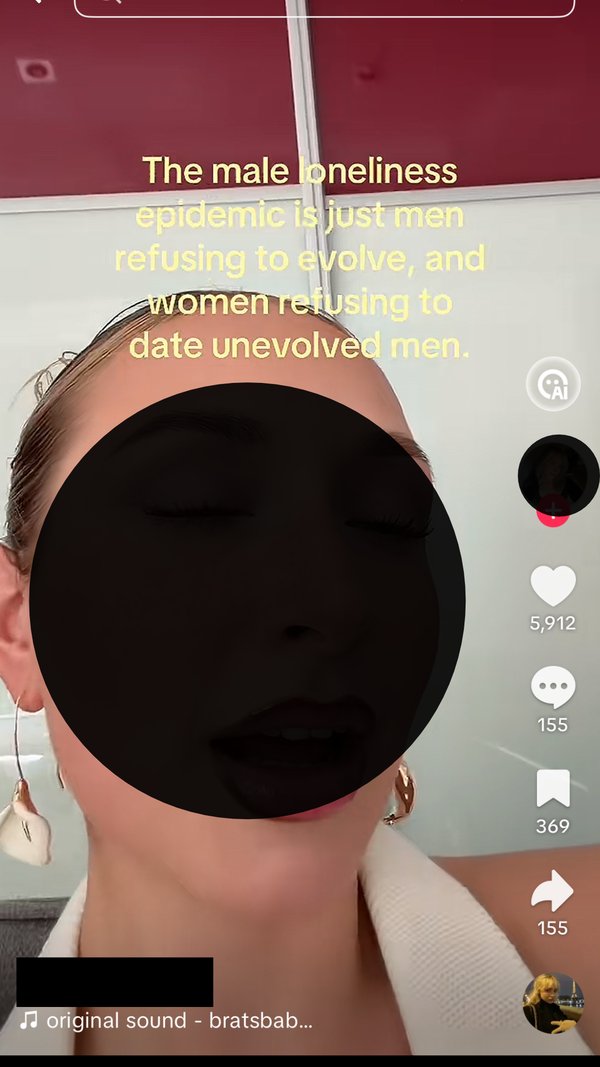
So what was this study around male loneliness actually centred on? Data gathered by the Australian Institute of Health and Welfare has defined social isolation and loneliness as two separate things that can, but not always, coexist. “Social isolation means having objectively few social relationships or roles and infrequent social contact” while “loneliness … is a subjective unpleasant or distressing feeling of a lack of connection to other people” (Australian Institute of Health and Welfare, 2025).
Now that we’ve identified that the study is about how connected people are and how connected they feel to one another, we can, in fact, prove that the above creator’s framing doesn’t fit the data.
Let’s take a look at that data.
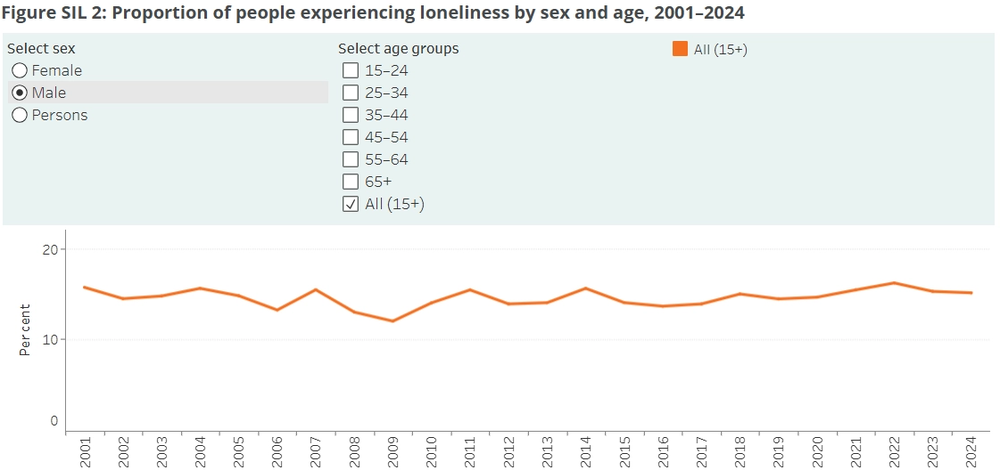
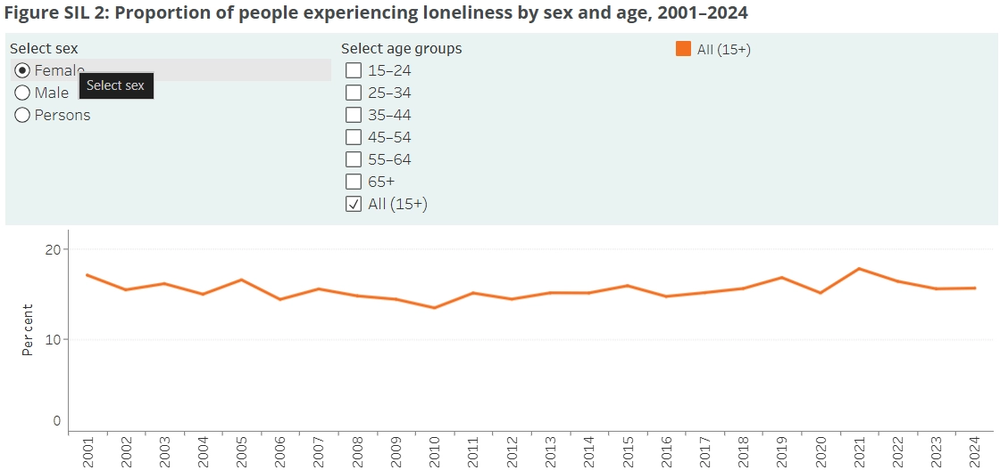
Figure 1 represents the proportion of males experiencing social loneliness and Figure 2 represents the same stat but for women. Going back to our earlier definition of what an epidemic is (above what is normally expected), this doesn’t appear to be the case. Reported loneliness in men has stayed in and around the same mark pretty consistently (Healthy Male, 2025). A slight rise can be seen, however, around 2020-2021, which was the start of what major world event? COVID-19. Remember that? When the whole world shut down and told everyone to stay inside their homes? I’m not shocked that rates have risen from that.
The data actually shows that women are slightly more likely to experience, on average, higher levels of social loneliness, and in 2024, an estimated 15% of males admitted to feeling lonely compared to 16% of women.
To back this data up, I also looked at the Australian Psychological Society, which states ‘women actually report feeling lonelier than men, with 20.4 per cent of them in 2023 classified as lonely … compared to 16.9 per cent of men’ (Australian Psychological Society, 2025).
There may be a catch to this data, in which Healthy Male suggests that men may be ‘less likely to admit feeling lonely’ (Healthy Male, 2025). This also wouldn’t surprise me. Remember, men are meant to be big and strong in society, often berated and put down when they express their feelings externally.
This is just Australian-based data and may look different in other parts of the world, but it doesn’t support the type of framing seen above. The “male loneliness epidemic” isn’t:
- An epidemic at all
- Centred around men’s ability to ‘get’ women
- Accurate, as women report higher levels of loneliness
This is a classic case of “don’t believe everything you see on social media.”
And of course, if you do feel lonely or isolated, there are places you can go:
Lifeline: 13 11 14
MensLine 1300 78 99 78
Beyond Blue 1300 22 4636
Or even getting in touch with me at hello@habiterapp.com. I’m always up for a chat and meeting new people!
— Chris
Want more like this?
Build better habits, one day at a time, with the habiter. app.
CDC (2023). Principles of epidemiology | lesson 1 - section 11. archive.cdc.gov.
Australian Institute of Health and Welfare (2025). Social isolation and loneliness. aihw.gov.au.
Australian Psychological Society (2025). What you may be getting wrong about male loneliness, APS in the AFR. psychology.org.au.
Healthy Male (2025). What’s the deal with the male loneliness epidemic? healthymale.org.au.